2021 College Scholastic Ability Test

Mathematics (Type Na)

Multiple Choice Questions
What is the value of \(3^0 \times 8^{\,\begin{array}{c}2 \\\hline 3\end{array}} \)? [2 points]
  1. \(1\)
  2. \(2\)
  3. \(3\)
  4. \(4\)
  5. \(5\)
Let \(\{a_n\}\) be a geometric progression with an initial term of \(\dfrac{1}{8}\) such that \(\dfrac{a_3}{a_2}=2\). What is the value of \(a_5\)? [2 points]
  1. \(\dfrac{1}{4}\)
  2. \(\dfrac{1}{2}\)
  3. \(1\)
  4. \(2\)
  5. \(4\)
What is the value of \(\displaystyle\lim_{x\;\!\to\;\!2}\! \dfrac{x^2+2x-8}{x-2} \)? [2 points]
  1. \(2\)
  2. \(4\)
  3. \(6\)
  4. \(8\)
  5. \(10\)
What is the global maximum value of the function \(f(x)=4\cos x+3\)? [3 points]
  1. \(6\)
  2. \(7\)
  3. \(8\)
  4. \(9\)
  5. \(10\)

Mathematics (Type Na)

Let \(A\) and \(B\) be independent events such that
\(\mathrm{P}(A|B)=\mathrm{P}(B)\:\) and \(\mathrm{P}(A\cap B)=\dfrac{1}{9}\).
What is the value of \(\mathrm{P}(A)\)? [3 points]
  1. \(\dfrac{7}{18}\)
  2. \(\dfrac{1}{3}\)
  3. \(\dfrac{5}{18}\)
  4. \(\dfrac{2}{9}\)
  5. \(\dfrac{1}{6}\)
Let \(f(x)=x^4+3x-2\). What is the value of \(f'(2)\)? [3 points]
  1. \(35\)
  2. \(37\)
  3. \(39\)
  4. \(41\)
  5. \(43\)
What is the number of positive integers \(x\) that satisfy the inequality \(\left(\!\dfrac{1}{9}\!\right)^{\!x}<3^{21-4x}\)? [3 points]
  1. \(6\)
  2. \(7\)
  3. \(8\)
  4. \(9\)
  5. \(10\)

Mathematics (Type Na)

Let us throw a die three times, and let \(a, b\) and \(c\) be the number it lands on, in that order. What is the probability that \(a\times b\times c=4\)? [3 points]
  1. \({\dfrac{1}{54}}\)
  2. \({\dfrac{1}{36}}\)
  3. \({\dfrac{1}{27}}\)
  4. \({\dfrac{5}{108}}\)
  5. \({\dfrac{1}{18}}\)
Consider the tangent line to the curve \(y=x^3-3x^2+2x+2\) at point \(\mathrm{A}(0,2)\). What is the
\(x\)-intercept of the line that passes through point \(\mathrm{A}\) perpendicular to this tangent line? [3 points]
  1. \(4\)
  2. \(6\)
  3. \(8\)
  4. \(10\)
  5. \(12\)
Let \(\{a_n\}\) and \(\{b_n\}\) be sequences such that
\(\displaystyle\sum_{k\;\!=\;\!1}^5 a_k=8\) and \(\displaystyle\sum_{k\;\!=\;\!1}^5 b_k=9\).
What is the value of \(\displaystyle\sum_{k\;\!=\;\!1}^5 (2a_k-b_k+4)\)? [3 points]
  1. \(19\)
  2. \(21\)
  3. \(23\)
  4. \(25\)
  5. \(27\)

Mathematics (Type Na)

Consider a sample of size \(16\) randomly sampled from a population following the normal distribution \(\mathrm{N}(20,5^2)\). Let \(\overline{X}\) be the mean of this sample. What is the value of \(\mathrm{E}(\overline{X})+\sigma(\overline{X})\)? [3 points]
  1. \(\dfrac{91}{4}\)
  2. \(\dfrac{89}{4}\)
  3. \(\dfrac{87}{4}\)
  4. \(\dfrac{85}{4}\)
  5. \(\dfrac{83}{4}\)
Let \(\{a_n\}\) be a sequence such that \(a_1=1\), and
\(\displaystyle\sum_{k\;\!=\;\!1}^n (a_k-a_{k+1})=-n^2+n\)
for all positive integers \(n\). What is the value of \(a_{11}\)? [3 points]
  1. \(88\)
  2. \(91\)
  3. \(94\)
  4. \(97\)
  5. \(100\)

Mathematics (Type Na)

For the set \(X=\{1,2,3,4\}\), what is the number of functions \(f:X\;\!\to\;\!X\) that satisfy the following? [3 points]
\(f(2)\leq f(3)\leq f(4)\)
  1. \(64\)
  2. \(68\)
  3. \(72\)
  4. \(76\)
  5. \(80\)
Suppose a point \(\mathrm{P}\) is moving on the number line, and its position \(v(t)\) at time \(t\) \((t \geq 0)\) is equal to
\(v(t)=2t-6\).
If the distance point \(\mathrm{P}\) travels from time \(t=3\) to \(t=k\,(k>3)\) is equal to \(25\), what is the value of the constant \(k\)? [4 points]
  1. \(6\)
  2. \(7\)
  3. \(8\)
  4. \(9\)
  5. \(10\)

Mathematics (Type Na)

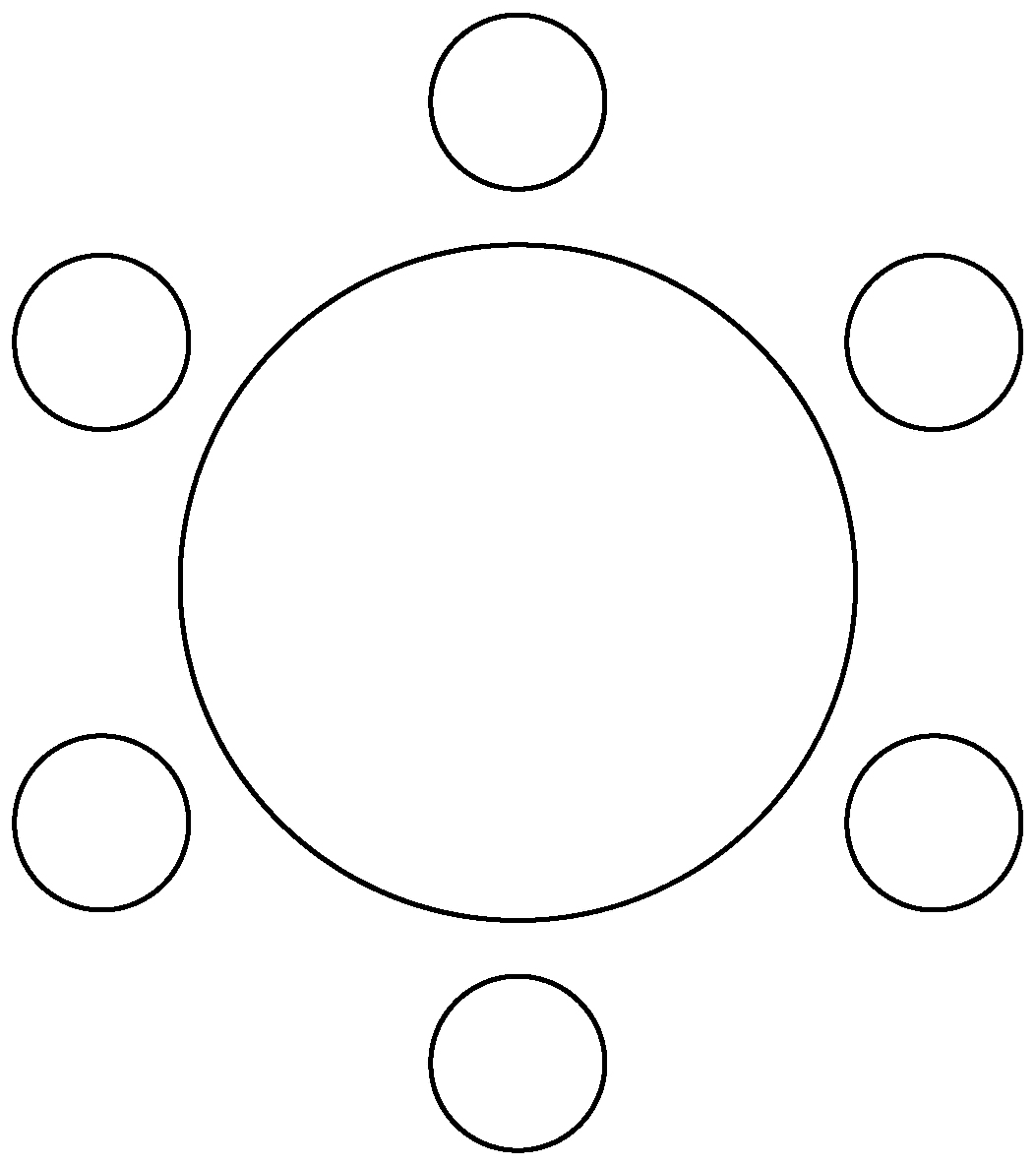
There are \(6\) students including the students \(\mathrm{A, B}\) and \(\mathrm{C}\). Compute the number of ways for these \(6\) students to sit around a circular table in equal distances while satisfying the following.
(※ If rotating one case results in another case, the two are not considered distinct.) [4 points]
  1. \(\mathrm{A}\) and \(\mathrm{B}\) are adjacent.
  2. \(\mathrm{B}\) and \(\mathrm{C}\) are not adjacent.
  1. \(32\)
  2. \(34\)
  3. \(36\)
  4. \(38\)
  5. \(40\)
What is the sum of all solutions to the equation
\(4\sin^2 x-4\cos\!\left(\!\dfrac{\pi}{2}+x\!\right)-3=0\)
where \(0\leq x <4\pi\)? [4 points]
  1. \(5\pi\)
  2. \(6\pi\)
  3. \(7\pi\)
  4. \(8\pi\)
  5. \(9\pi\)

Mathematics (Type Na)

Let \(f(x)\) and \(g(x)\) be polynomial functions such that
\(\displaystyle\lim_{x\;\!\to\;\!0}\!\dfrac{f(x)+g(x)}{x}=3\:\) and \(\:\displaystyle\lim_{x\;\!\to\;\!0}\!\dfrac{f(x)+3}{xg(x)}=2\).
Let \(h(x)=f(x)g(x)\). What is the value of \(h'(0)\)? [4 points]
  1. \(27\)
  2. \(30\)
  3. \(33\)
  4. \(36\)
  5. \(39\)
Let \(a\) be a real number such that \(\dfrac{1}{4}<a<1\). Let \(\mathrm{A}\) and \(\mathrm{B}\) be points where the line \(y=1\) meets the two curves \(y=\log_a x\) and \(y=\log_{4a} x\) respectively, and let \(\mathrm{C}\) and \(\mathrm{D}\) be points where the line \(y=-1\) meets the two curves \(y=\log_a x\) and \(y=\log_{4a} x\) respectively.
What is the list of correct statements in the <List>? [3 points]
  1. The point \((0,1)\) externally divides the line segment \(\mathrm{AB}\) in the ratio \(1:4\).
  2. If the quadrilateral \(\mathrm{ABCD}\) is a rectangle,
    then \(a=\dfrac{1}{2}\).
  3. If \(\overline{\mathrm{AB}}<\overline{\mathrm{CD}}\), then \(\dfrac{1}{2}<a<1\).
  1. a
  2. c
  3. a, b
  4. b, c
  5. a, b, c

Mathematics (Type Na)

A random variable \(X\) follows a normal distribution with a mean of \(8\) and a standard deviation of \(3\). A random variable \(Y\) follows a normal distribution with a mean of \(m\) and a standard deviation of \(\sigma\). The random variables \(X\) and \(Y\) satisfy the following.
\(\mathrm{P}(4\leq X\leq 8)+\mathrm{P}(Y\geq 8)=\dfrac{1}{2}\)
What is the value of \(\mathrm{P}\!\left(\!Y\leq 8+\dfrac{2\sigma}{3}\!\right)\) computed with the standard normal table to the right? [3 points]
\(z\) \(\mathrm{P}(0\!\leq\! Z \!\leq\!z)\)
\(1.0\) \(0.3413\)
\(1.5\) \(0.4332\)
\(2.0\) \(0.4772\)
\(2.5\) \(0.4938\)
  1. \(0.8351\)
  2. \(0.8413\)
  3. \(0.9332\)
  4. \(0.9772\)
  5. \(0.9938\)
For real numbers \(a\,(a>1)\), consider the function
\(f(x)=(x+1)(x-1)(x-a)\).
What is the maximum value of \(a\) for which the function
\(\displaystyle g(x)=x^2\int_0^x f(t)dt-\int_0^x t^2f(t)dt\)
only has one local extremum? [4 points]
  1. \(\dfrac{9\sqrt{2}}{8}\)
  2. \(\dfrac{3\sqrt{6}}{4}\)
  3. \(\dfrac{3\sqrt{2}}{2}\)
  4. \(\sqrt{6}\)
  5. \(2\sqrt{2}\)

Mathematics (Type Na)

A sequence \(\{a_n\}\) with \(0<a_1<1\), satisfies the following for all positive integers \(n\).
  1. \(a_{2n}=a_2\times a_n+1\)
  2. \(a_{2n+1}=a_2\times a_n-2\)
If \(a_7=2\), what is the value of \(a_{25}\)? [4 points]
  1. \(78\)
  2. \(80\)
  3. \(82\)
  4. \(84\)
  5. \(86\)
Short Answer Questions
In the expansion of the polynomial \((3x+1)^8\), compute the coefficient of \(x\). [3 points]
Let \(f(x)\) be a function such that \(f'(x)=3x^2+4x+5\) and \(f(0)=4\). Compute \(f(1)\). [3 points]

Mathematics (Type Na)

Compute \(\log_3 72 - \log_3 8\). [3 points]
Compute the value of the positive number \(k\) for which the curve \(y=4x^3-12x+7\) and the line \(y=k\) meet at exactly \(2\) points. [3 points]
The function
\(f(x)=\begin{cases} -3x+a &\; (x\leq1)\\\\ \dfrac{x+b}{\sqrt{x+3}-2} &\; (x>1) \end{cases}\)
is continuous on the set of all real numbers.
Compute \(a+b\). (※ \(a\) and \(b\) are constants.) [4 points]

Mathematics (Type Na)

Compute the area of the region enclosed by the curve \(y=x^2-7x+10\) and the line \(y=-x+10\). [4 points]
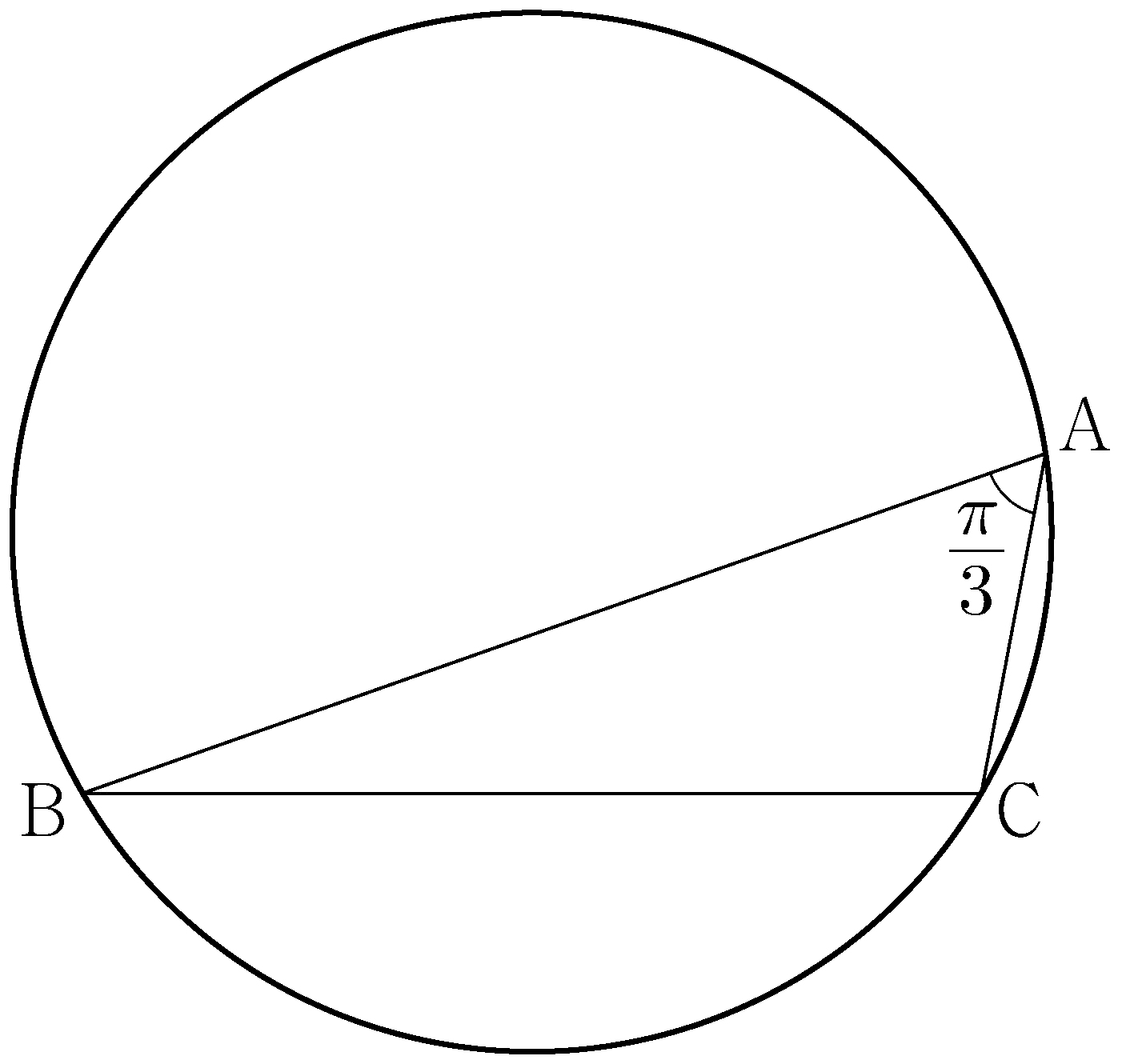
Consider a triangle \(\mathrm{ABC}\) where \(\angle\mathrm{A}=\dfrac{\pi}{3}\) and \(\overline{\mathrm{AB}}:\overline{\mathrm{AC}}=3:1\). If the circumcircle of the triangle \(\mathrm{ABC}\) has a radius of \(7\), the length of the line segment \(\mathrm{AC}\) is equal to \(k\). Compute \(k^2\). [4 points]

Mathematics (Type Na)

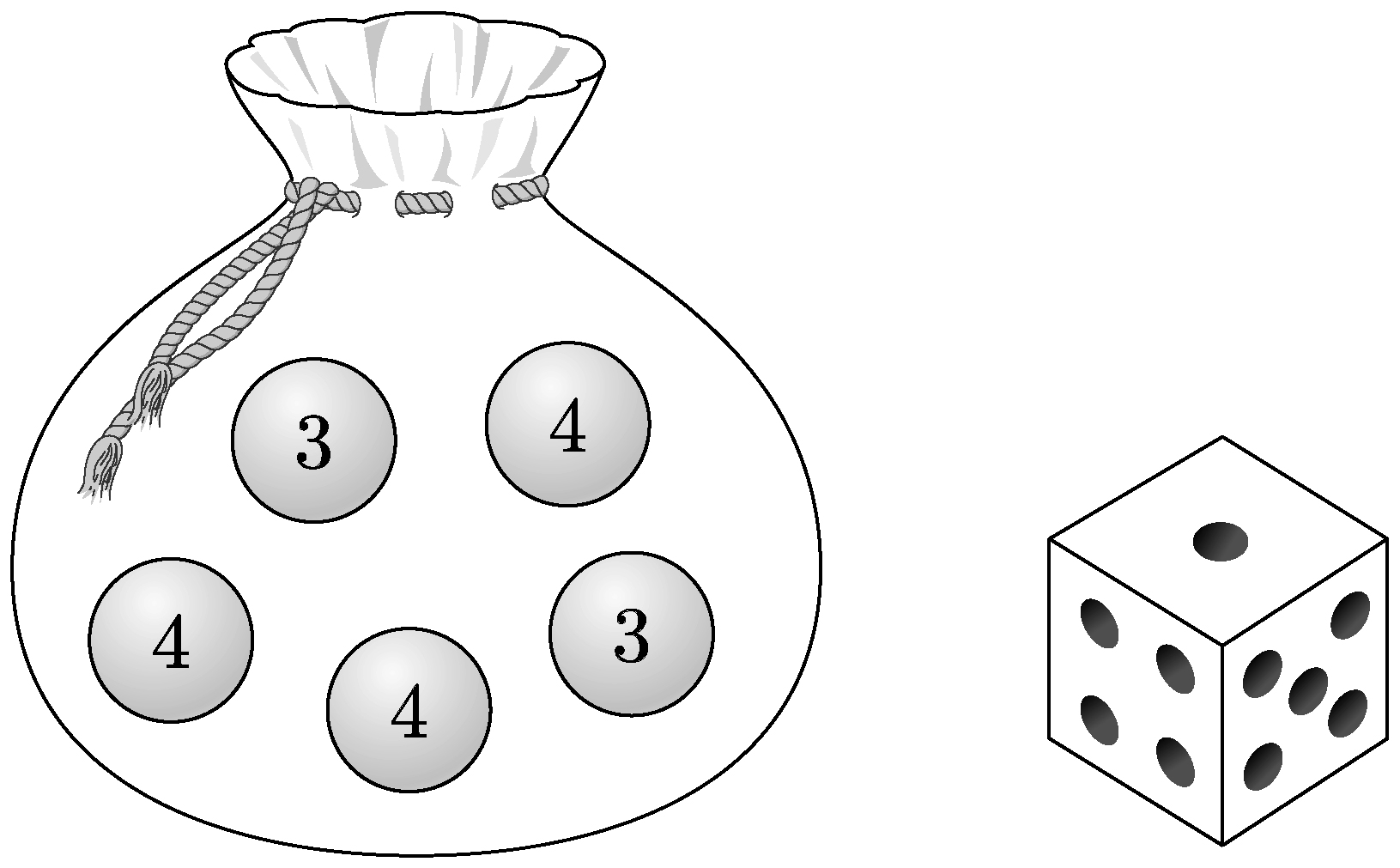
There is a sack containing \(5\) balls marked with numbers \(3,3,4,4\) and \(4\) respectively. Let us perform the following trial and set a score using this sack and a die.
Randomly take out a ball from the sack.
If the number marked on the ball taken out is \(3\), throw the die \(3\) times and set the score as the sum of the three numbers it lands on.
If the number marked on the ball taken out is \(4\), throw the die \(4\) times and set the score as the sum of the four numbers it lands on.
After performing this trial once, the probability that the score is set to \(10\), is equal to \(\dfrac{q}{p}\). Compute \(p+q\).
(※ \(p\) and \(q\) are positive integers that are coprime.) [4 points]
Consider a cubic function \(f(x)\) with a leading coefficient of \(1\), and a linear function \(g(x)\).
Let the function \(h(x)\) be
\(h(x)=\begin{cases} |f(x)-g(x)| &\; (x<1)\\\\ f(x)+g(x) &\; (x\geq 1). \end{cases}\)
It is given that the function \(h(x)\) is differentiable on the set of all real numbers, and that \(h(0)=0\) and \(h(2)=5\). Compute \(h(4)\). [4 points]